You Only Get One Mystery
Got up on a cool morning. Leaned out a window.
No cloud, no wind. Air that flowers held
for awhile. Some dove somewhere.
Been on probation most of my life. And
the rest of my life been condemned. So these moments
count for a lot - peace, you know.
Let the bucket of memory down into the well,
bring it up. Cool, cool minutes. No one
stirring, no plans. Just being there.
This is what the whole thing is about.
- William Stafford, Just Listening
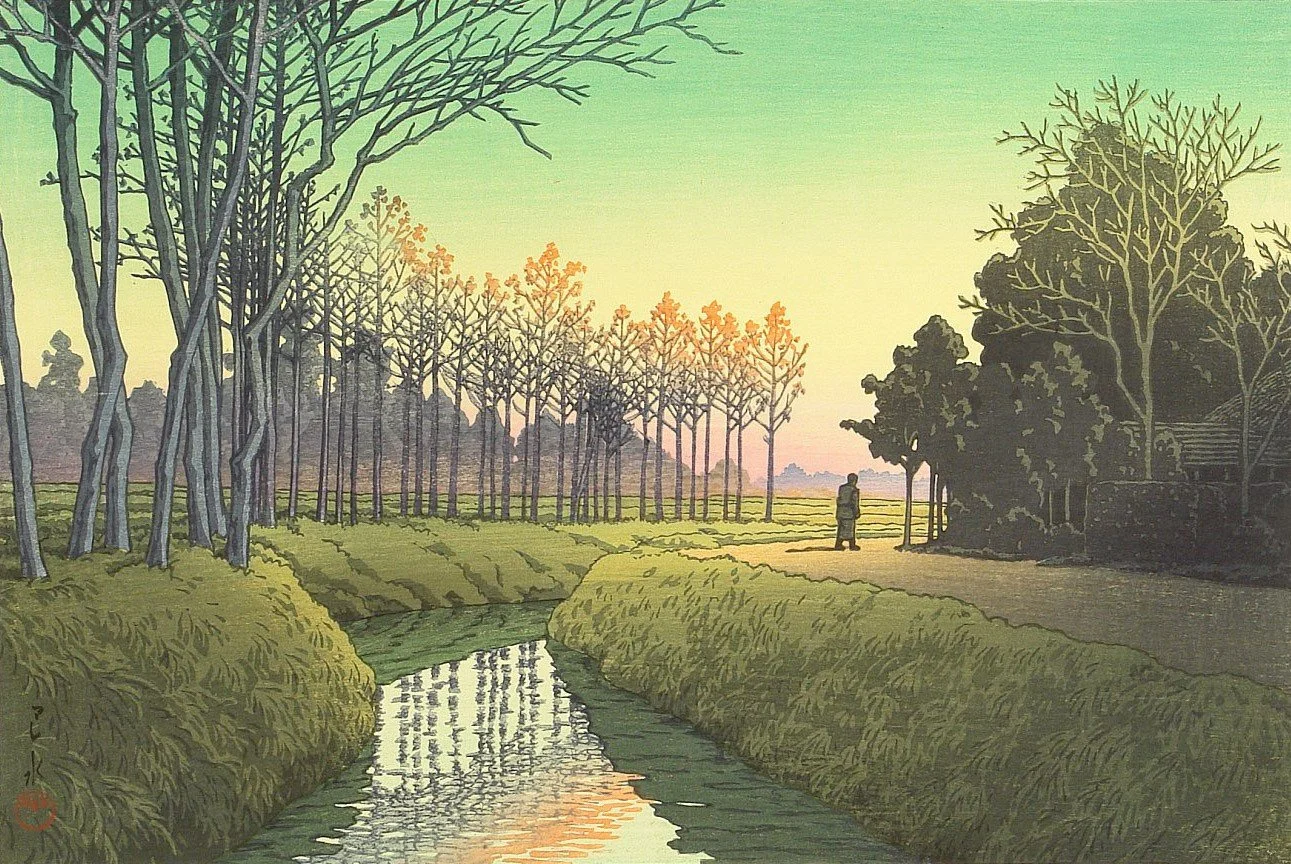
Here, William Stafford invites us to drop the ball of our wandering and embrace the place between movement and stillness. That ever-present space wherein we may notice the air, the flowers, and the birds as we finally “let the bucket of memory down into the well” to bring up….what exactly? Perhaps, simply the “cool, cool minutes” that only arise when we have cast aside our stirring and our plans in favor of “just being there.” Maybe so.
And maybe there’s something more. Something folded into those moments. Some incandescent secret thrumming in the darkness of our lives, directing our energy, organizing our emotions, and connecting the gaps in our conscious experience. What philosopher of religion Richard Kearney calls the persona, what C.G. Jung called the Self, or what Walt Whitman called the “soul that stands cool and composed before a million universes.”
Odysseas Elytis, that great Greek poet of transparency, writes,
“Here, now as then, exhausted perhaps by our peregrinations, we need a little silence before hearing again with a virgin ear the huge, susurrating poplar of our thoughts.”
Psychodynamic psychotherapy invites us to do just this – to slow down and look around, inquiring about the nature of the present moment and our place within it, even if whatever is arising (e.g., thoughts, feelings, images) seems insignificant. Elytis, again, lures us with the possibility that “you will come to learn a great deal if you study the insignificant in depth.”
Similarly, Zen teacher Ryushin Paul Haller invites us to cast aside our “well-crafted agendas of distraction”. Only then, he urges, can we bring the bucket of what-we-already-know to the surface and find there the mystery that we’ve been thirsting for all along.
As Haller says,
“it’s not that we need to know more. It’s something more subtle. We need to know what we already know and we need to discover how to put it into action.”
Elytis incites us to the same goal when he says,
“Doubtlessly a separate, irreplaceable sensation exists for each of us, which if we don’t find and isolate in time, and cohabit with later, and fill with visible acts, we’re lost.”
If all of this sounds a little too abstract, a little too wise, perhaps it’s best to just follow Haller’s formula for embracing the mystery at any moment:
pause, notice, connect, abide
In what ways does your life support your ability to “let the bucket of memory down into the well” and bring up the “cool, cool minutes” of presence? How would your priorities need to shift to cultivate enough silence to hear the “susurrating poplar of your thoughts”? How would it affect your relationships to uncover the incandescent secret thrumming at the center of your being? How will you make life an expression of your
one mystery?
References
Elytis, O. (1998). Eros, Eros, eros: Selected and last poems. Copper Canyon Press.
Haller, R. P. (2021, February 6). You only get one mystery. Black Mountain Zen. https://www.blackmountainzen.org/podcast/you-only-get-one-mystery
Kearney, R. (2002). The god who may be: The hermeneutics of religion. Indiana University Press.
Stafford, W. (2014). Ask me: 100 essential poems. Graywolf Press.
Art by Hasui Kawase